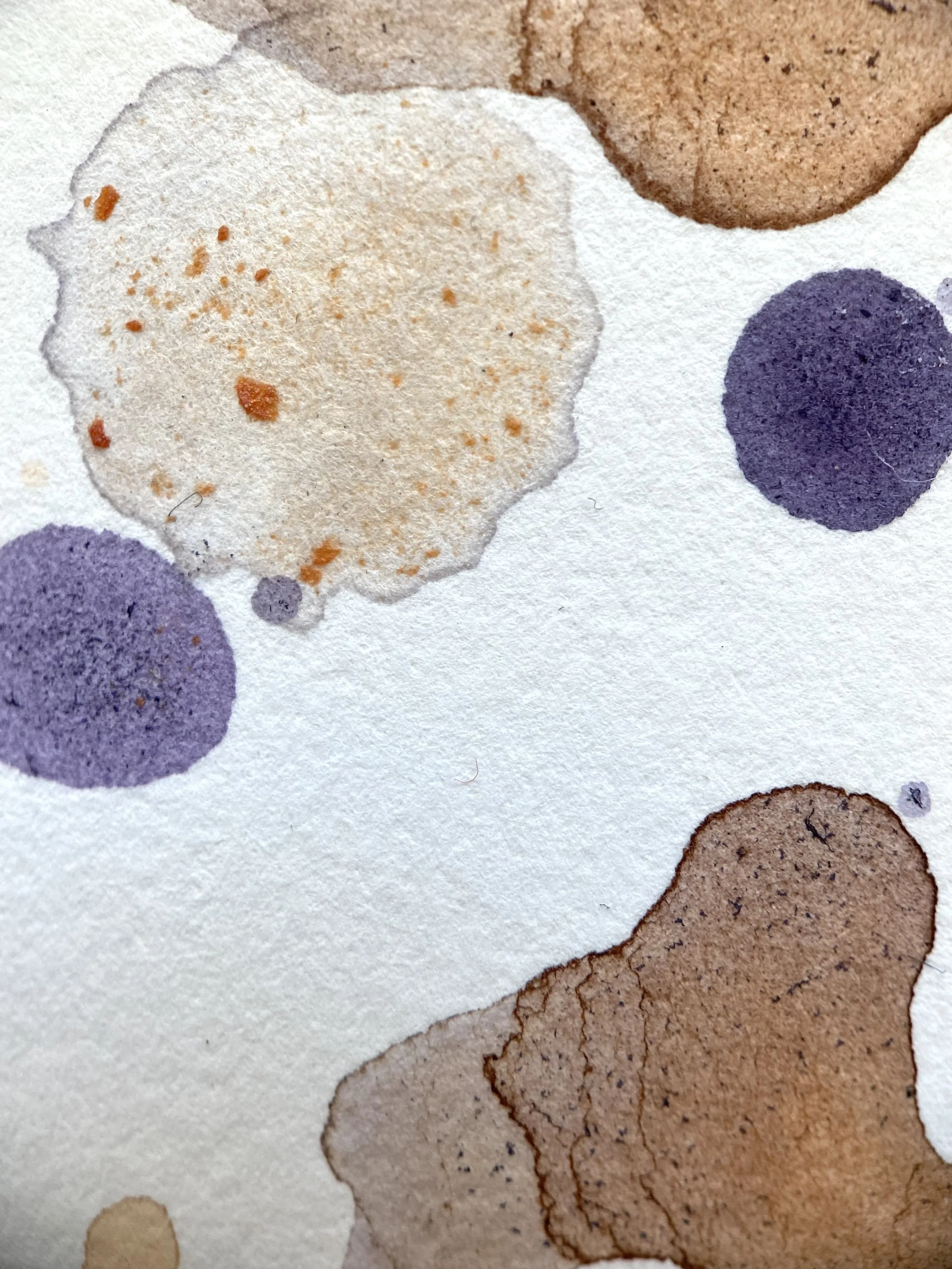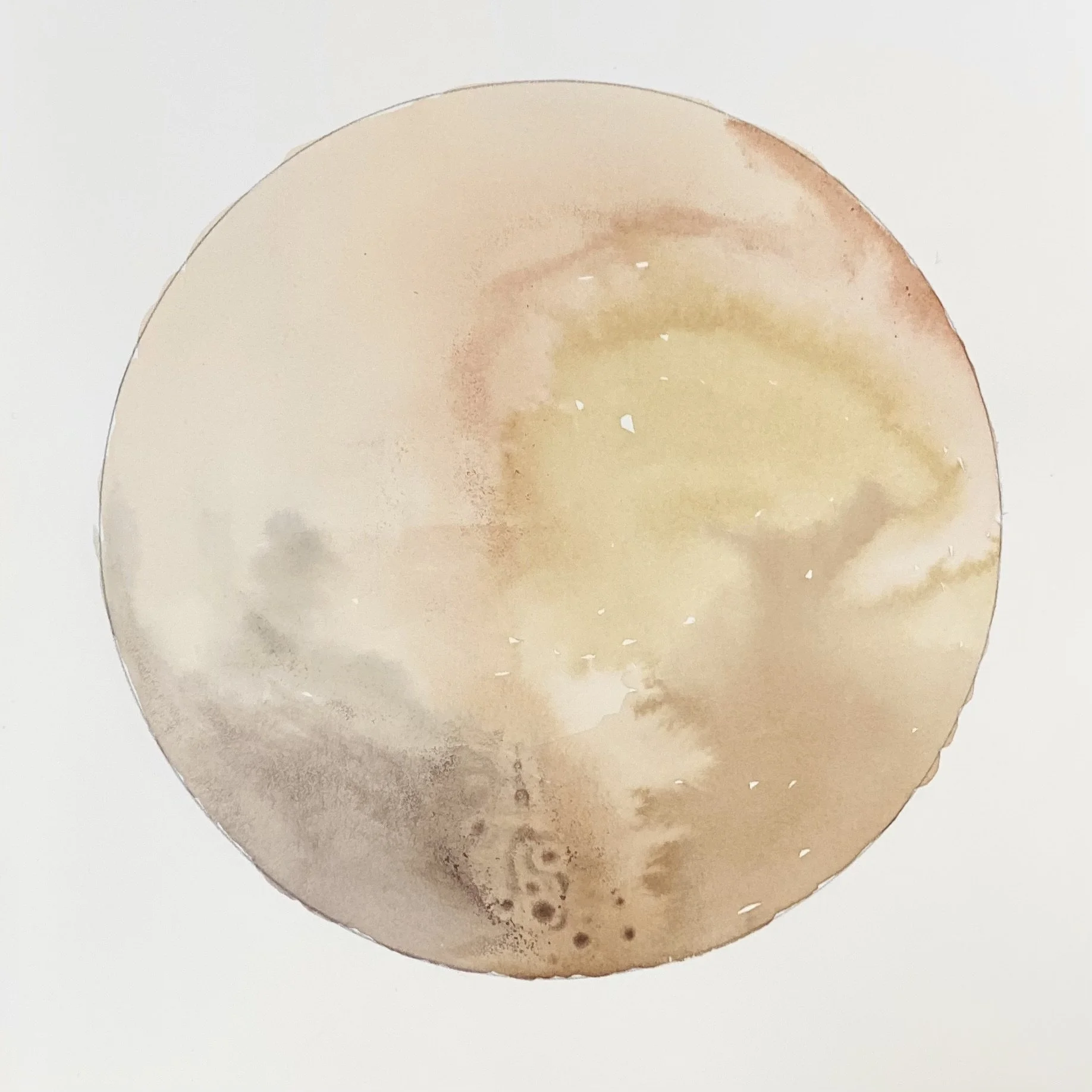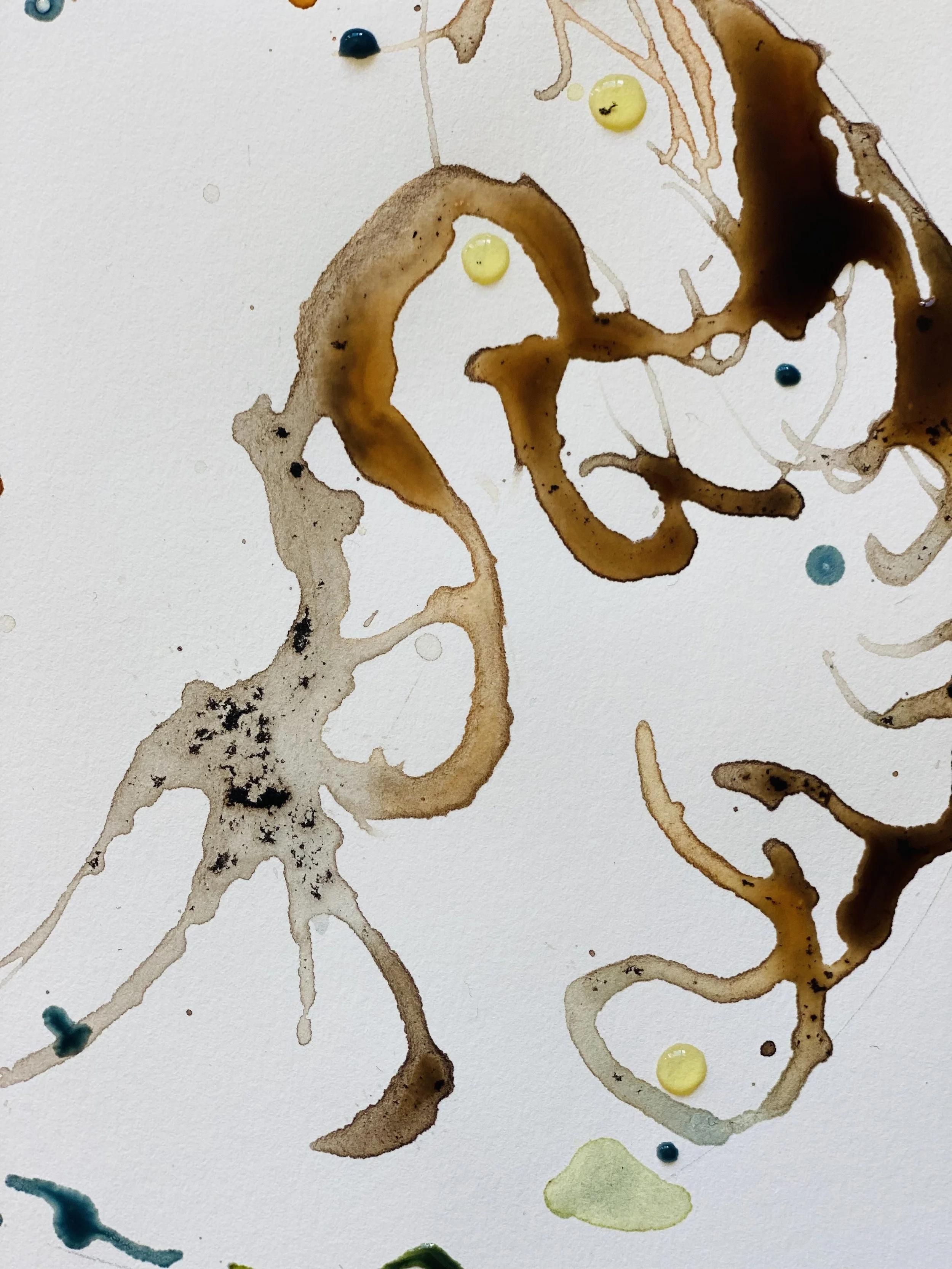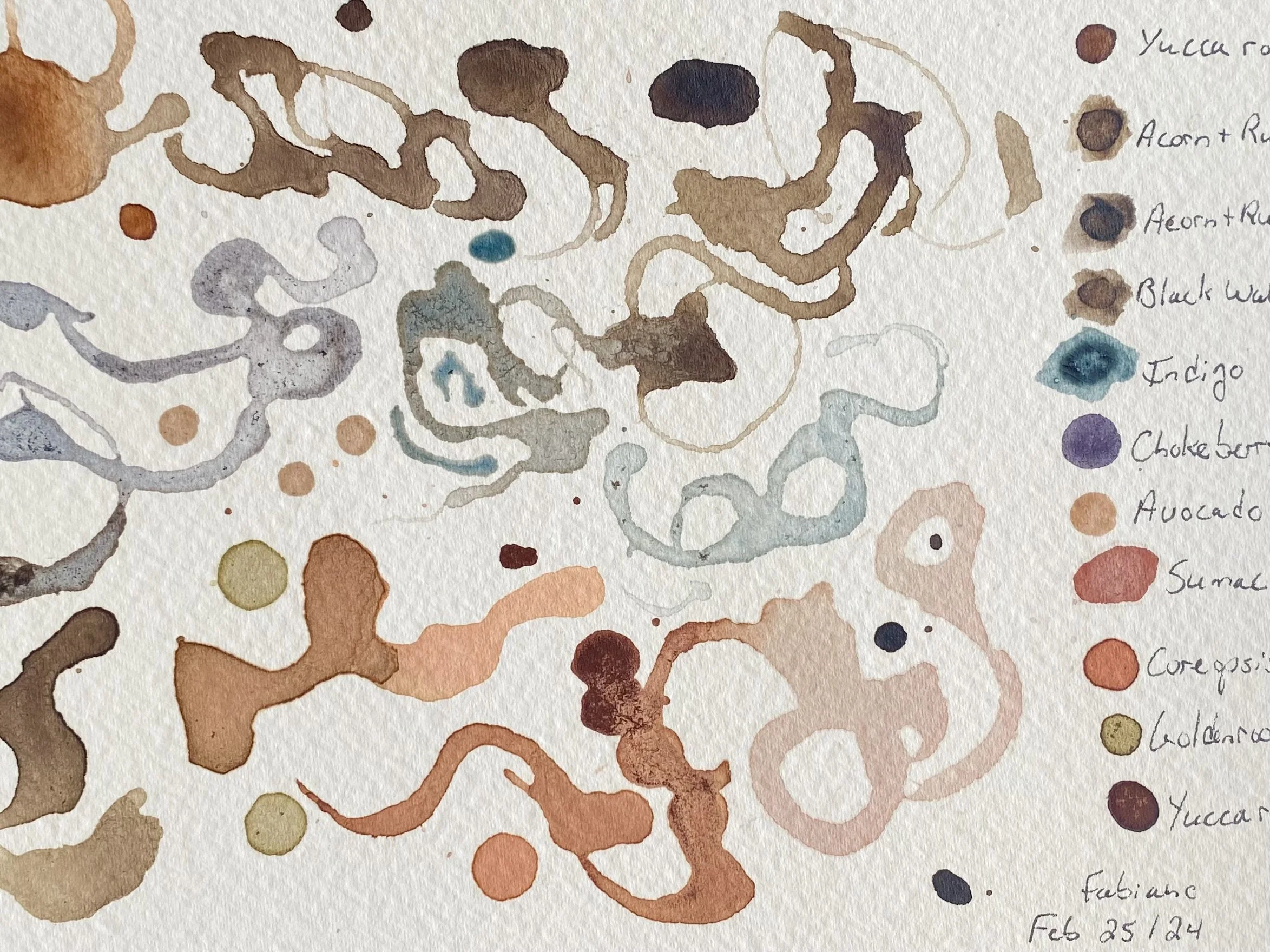
Writings on botanical inks will tell you that the majority are not lightfast. This means that their colours will change and fade over time. It is, after all, the beauty of the medium.
Last year, the World Wildlife Federation sent out a press release with the title “Catastrophic 73% decline in the average size of global wildlife populations in just 50 years 'reveals a ‘system in peril’”. The message was clear, “parts of the planet are approaching dangerous tipping points driven by the combination of nature loss and climate change”.
Picking a handful of flowers, berries or leaves shouldn’t have an impact; I am only one hand. However, there are many others out there who, like me, are curious about colour and find joy in experimentation. All naturally occurring plants have a purpose and none are to give us pleasure. Insects, birds and other wildlife rely on native plant species for their survival and we, in turn, rely on them for ours. Knowing this makes for a much more laboured process when selecting natural materials for colour making.
There is no reciprocity. I am only taking.
Interesting Reads
Book: Make Ink: A Forager’s Guide to Natural Inkmaking by Jason Logan
Book: Inks & Paints of the Middle East: A Handbook of Abbasid Art Technology by Joumana Medlej
Video (5 mins): Why insects are so crucial to life on Earth | BBC Ideas
Book: Silent Spring by Rachel Carson